Private AI Is Becoming a Design Claim You Can Audit
Private AI should not be a trust-me label. It should be an architecture claim that can be tested, inspected, and challenged.
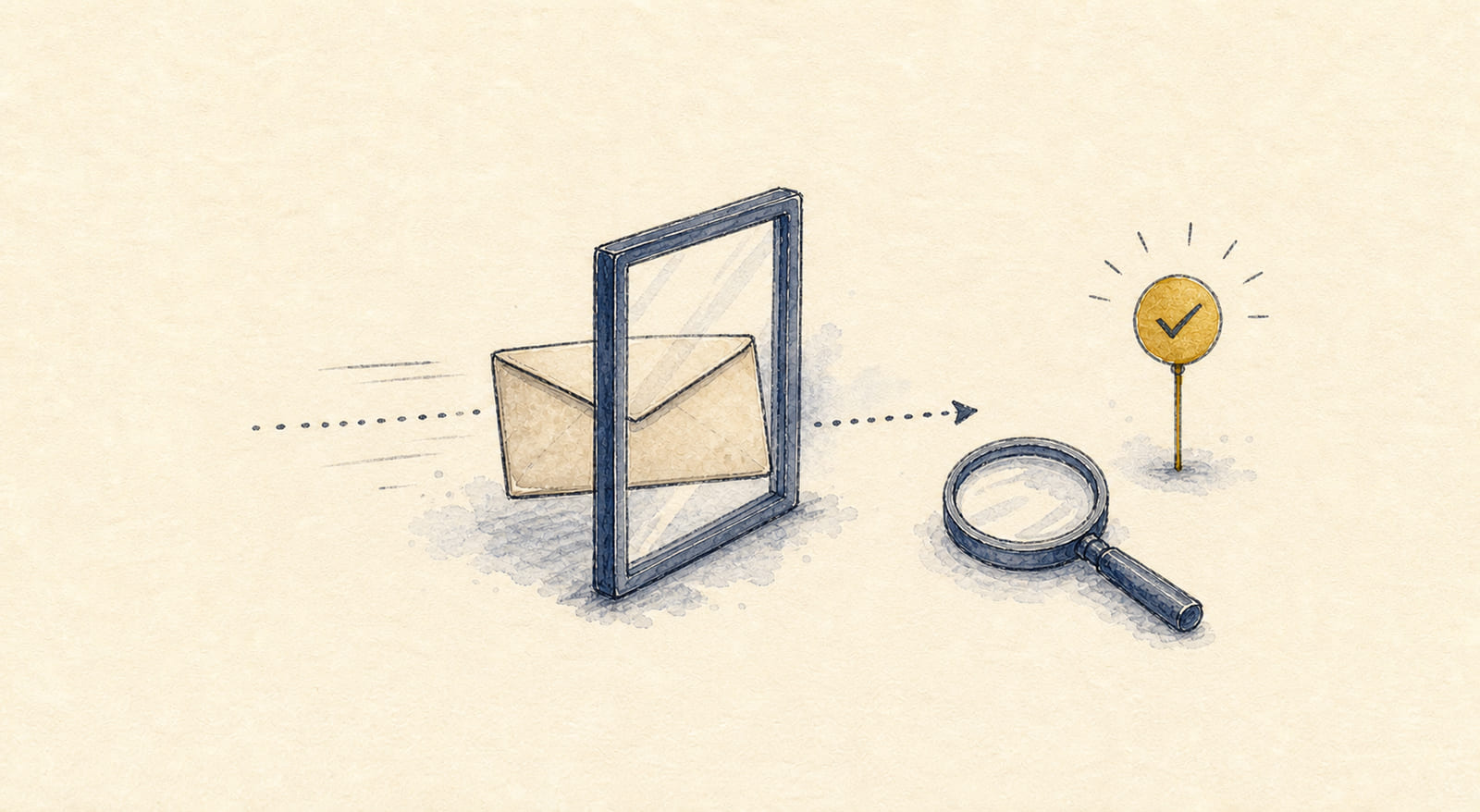
Why this matters
“Private AI” is going to become one of those phrases that appears everywhere.
It sounds reassuring. It fits on a landing page. It lets a product imply that personal data is safe without forcing the reader to ask what safe actually means.
But private AI should not be a trust-me label.
It should be a design claim. And if it is a design claim, then someone should be able to inspect it, test it, and argue with it.
That is why Apple’s Private Cloud Compute is interesting. Not because Apple says “privacy” more beautifully than everyone else. The interesting part is that Apple is trying to describe a system where some cloud AI requests can be handled under enforceable privacy constraints, with public technical requirements and a story about verification.
Worked example
Apple’s 2024 Private Cloud Compute write-up is unusually explicit about the problem. Cloud AI requests may need access to personal user data while being processed, but traditional cloud infrastructure makes privacy promises hard to verify. Apple names the risks plainly: logging, opaque software stacks, privileged access, and administrative tools that could accidentally or deliberately expose sensitive data.
Its stated requirements for Private Cloud Compute include stateless computation on personal data, enforceable guarantees, no privileged runtime access, non-targetability, and verifiable transparency.
Those are not marketing bullets. They are product architecture commitments.
They also create a useful checklist for evaluating any private AI system:
| Question | Why it matters |
|---|---|
| What happens locally? | Local processing keeps sensitive context closest to the user. |
| What leaves the device? | The boundary matters more than the slogan. |
| Is data retained? | Memory and logs can quietly change the trust model. |
| Who has privileged access? | Internal access can break external promises. |
| Can outsiders verify claims? | Auditability turns trust into something less theatrical. |
The caveat is that auditability also invites challenge. That is a feature, not a flaw.
Recent 2026 research has already started poking at Apple’s claims and implementation. One paper analyzing Private Cloud Compute points out the difficulty of evaluating a system where public specifications exist but compiled binaries, model interfaces, and reproducible builds remain limited. Another paper on Apple Intelligence token handling describes practical token theft attacks and argues that anonymizing identity is not enough if access tokens can be transferred.
That does not make the whole architecture worthless. It makes the conversation real.
Limitations / not a fit
The wrong takeaway is that Apple has solved private AI, or that a research paper means the design failed.
The better takeaway is more practical: privacy claims become more serious when they are specific enough to be attacked.
That is a strange standard, but a useful one. A vague promise can survive forever because there is nothing to inspect. A concrete architecture has edges. Researchers can push on those edges. Product teams can improve them. Users and developers can learn what the system is actually promising.
For personal AI, this matters because the inputs only get more sensitive as the tools become more useful.
The more an AI knows about your work, relationships, habits, health, or private drafts, the less acceptable it becomes for privacy to live only in copywriting.
Privacy has to show up in the architecture.
Sources
- Apple Security Research: Private Cloud Compute
- Apple Support: Apple Intelligence privacy
- arXiv: Unlocking Apple’s Private Cloud Compute
- arXiv: Too Private to Tell